
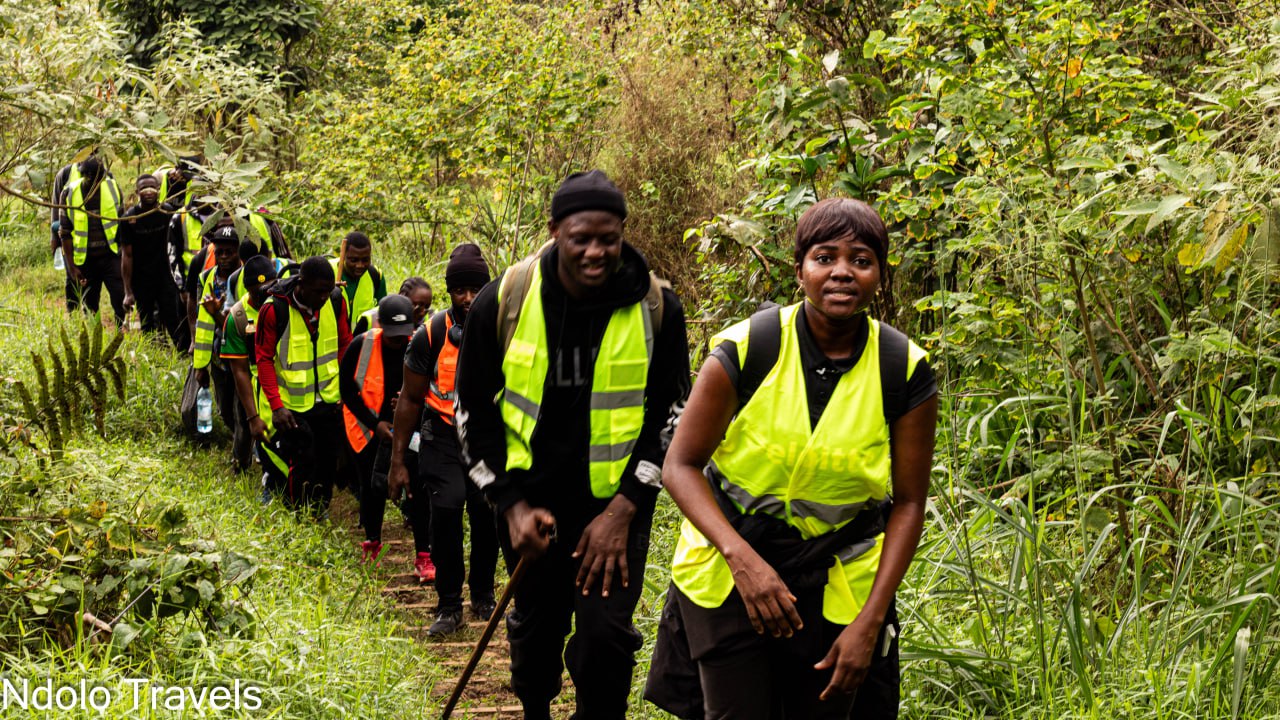
Mount Cameroon isn’t just a mountain — it’s an experience that moves differently for everyone who dares to climb it. Some come for the thrill, some for the challenge, and some because there’s a quiet voice inside that wants to see what they’re made of. But one of the most important decisions you’ll make before stepping foot on that trail is this: How many days should your hike take — two or three?
Both routes lead to the same summit, but the way you experience it, the pace, the exhaustion, and even the memories you make will differ completely. So, in this guide, I’ll take you through both itineraries — the 2-day fast push and the 3-day steady adventure — with all the small details that make each one special.
By the end, you’ll know exactly which version of the Mount Cameroon climb fits your spirit, your fitness, and your goals.
The Two-Day Mount Cameroon Hike: The Fast-Track Challenge
Let’s start with the shorter route — the 2-day hike. This itinerary is designed for those who are fit, time-conscious, or just love a good challenge. It’s also the same general path used by the famous Mount Cameroon Race of Hope runners, though of course, you’ll be walking instead of sprinting through the clouds.
The 2-day itinerary is physically demanding and mentally intense, but it rewards you with raw adventure. If you want to test your endurance, push your limits, and earn that summit sunrise faster, this is for you.
Day 1: The Climb to Hut 2
Your journey begins early — around 6:00 a.m. in Buea, where you’ll meet your guide, porters, and team. After checking your gear and making sure everyone has permits, you’ll drive up through Upper Farms — the main park entrance — to start the hike.
The first few hours take you through the tropical rainforest zone. The trail winds under massive trees, the air damp and cool, with the smell of earth and moss. Sometimes you’ll hear the call of distant monkeys or birds flitting through the canopy. This part of the climb is steady but not yet steep. You’ll reach Hut 1 after about 2–3 hours, where you can drink water, rest your legs, and chat with the park ranger.
After a short break, you’ll continue toward the Intermediary Hut (Hut 1B). The forest starts to thin, giving way to shorter trees and tall grasses — this is the savanna zone, home to the unique bishop birds that only exist in this part of the world. The males have long, striking tail feathers that shimmer in the light, while the females are larger and quieter, flying low through the grass.
Once you reach Hut 1B, you’re about halfway to your destination for the night. You’ll take a short rest, snack, and stretch before pushing through the last leg to Hut 2 — an eco-lodge that feels like a small oasis halfway up the mountain.
Reaching Hut 2 (2,800m) usually takes about 6–7 hours total from the starting point. Here, you’ll find cabins, showers, a small restaurant, and real food — breakfast starts at around 3,000 CFA, while hot meals can go up to 20,000 CFA depending on what you order. Drinks are available too.
You’ll sleep here tonight. Most hikers take a quick shower, eat, and relax by the fire before heading to bed early — around 8:00 p.m. — because tomorrow starts long before sunrise.
Day 2: The Summit Push and Descent
You’ll wake up around 3:00 a.m. It’s cold and dark, so you’ll strap on your headlamp, layer up, and start the slow, quiet ascent to Hut 3, the final resting point before the top. The path here is steeper and rockier, with sandy stretches that test your legs. The stars hang above you like diamonds, and the air grows thinner with every step.
After 2–3 hours, you’ll reach Hut 3, a simple shelter where most hikers pause briefly to drink water and catch their breath. From here, it’s another hour or two to the summit. The final stretch is often the hardest — the wind is strong, the slope sandy, and your lungs will remind you that you’re now above 4,000 meters. But when you reach the summit at 4,040m, everything changes.
The sun rises slowly, painting the lava fields in gold and orange. You can see the curve of the ocean on one side and the deep green valleys on the other. The world feels far away, and for a few minutes, you forget how tired you are. It’s one of those moments that etch themselves into your memory forever.
After soaking in the view and taking photos, you begin the descent back to Buea. You’ll pass back through the same huts — Hut 3, Hut 2, Hut 1 — before finally exiting through Upper Farms. By late afternoon or evening, you’ll be back in town, ready for a warm shower and a cold drink.
It’s a long, exhausting day — sometimes 10–12 hours of hiking in total. But if you’re strong, focused, and determined, it’s one of the most satisfying challenges you can conquer in West Africa.
Who the 2-Day Hike Is For
This option is best for hikers who:
-
Have a good level of fitness and are used to long treks or endurance sports.
-
Are short on time but still want to reach the summit.
-
Don’t mind long, continuous hiking days with little rest.
-
Want to test their physical and mental strength.
The 2-day hike doesn’t give you much time to stop and absorb the views. It’s about grit, focus, and that unbeatable sense of achievement when you do it in record time.
But if you want something deeper — if you want to explore, rest, and experience the mountain fully — then the 3-day itinerary might be exactly what your soul needs.
The Three-Day Mount Cameroon Hike: The Full Experience
The 3-day hike is the version most travelers choose, and for good reason. It gives you time to enjoy the mountain instead of rushing through it. You’ll still climb, sweat, and push your limits — but you’ll also have moments to stop, breathe, and take in the beauty around you.
It’s ideal for those who want a balance between challenge and enjoyment, and it’s the itinerary we at Ndolo Travels recommend for most of our guests.
Day 1: Buea to Hut 2 — Slow and Steady
Just like the 2-day itinerary, your adventure begins early in Buea, passing through Upper Farms into the forest trail. The first few hours will be spent climbing steadily through the rainforest. Here, the temperature is cool, and the air smells fresh and alive.
You’ll rest briefly at Hut 1, refill your water, and chat with the ranger before moving toward the Intermediary Hut (Hut 1B). Because the pace is slower in the 3-day hike, you get time to notice the little details — the chirping birds, the mist rolling down from the canopy, and the sound of your boots on damp earth.
After another short break, you’ll continue to Hut 2, arriving around 3 or 4 p.m. You’ll check in, order food, and take a hot shower. Dinner at the eco-lodge often feels like a celebration. You’re halfway up the tallest mountain in West Africa, and you’ve earned that meal.
You’ll spend the night here. The stars are clearer than you’ve probably ever seen them, and the silence of the mountain wraps around you like a blanket.
Day 2: Hut 2 to the Summit — and Down to Hut 2 or Hut 3
The next morning, you’ll wake around 3:30 or 4:00 a.m. for the summit push. Your guide will brief you on the weather, and after some tea or coffee, you’ll start the climb. The air grows colder, and the trail turns from grass to rock.
You’ll reach Hut 3 in a few hours, rest briefly, and then continue toward the top. The final section — often sandy and steep — tests your willpower more than your muscles. But when the first rays of sunrise hit your face at the 4,040m summit, every ache disappears.
From there, you can descend back to Hut 2 for lunch and a warm rest, or, for those wanting more of an adventure, continue to Hut 3 to camp overnight and experience the mountain’s upper zones in their quiet glory.
Many hikers prefer returning to Hut 2, where hot food and soft beds await. Others spend a night at Hut 3 for solitude and a wilder experience. Both are options — it depends on your stamina and spirit.
Day 3: The Descent to Buea
On the third day, you’ll descend slowly back to Buea, taking in views that most people rush past. You’ll pass through all the vegetation zones again — from the rocky summit to the savanna, back into the dense rainforest.
This last day is emotional for many. You started this journey curious and unsure, and now you’re returning stronger, more confident, and full of stories. By the time you reach the park gate, your legs will ache but your heart will feel full.
You’ll be greeted by your Ndolo Travels team with water, snacks, and plenty of laughter. Then, it’s time to drive back to your hotel in Buea or onward to Limbe or Douala for a well-earned rest.
Who the 3-Day Hike Is For
This option is perfect for:
-
First-time hikers or beginners who want a manageable pace.
-
Travelers who want to soak in the scenery and learn about the ecosystem.
-
Those who want to camp longer on the mountain and truly feel its rhythm.
-
Anyone who values rest, reflection, and connection over speed.
The 3-day hike transforms Mount Cameroon from a physical test into a full-body, mind, and soul experience. You climb, rest, observe, and reconnect with nature in a way the 2-day rush rarely allows.
Comparing the Two Itineraries: 2-Day vs. 3-Day
| Feature | 2-Day Hike | 3-Day Hike |
|---|---|---|
| Total Duration | ~30–36 hours | ~48–72 hours |
| Fitness Level Required | High | Moderate |
| Daily Hiking Hours | 8–12 hours/day | 4–8 hours/day |
| Best For | Fit adventurers, short on time | First-timers, photographers, slow travelers |
| Accommodation | One night at Hut 2 | Two nights (Hut 2, optional Hut 3) |
| Experience | Fast, intense, goal-driven | Reflective, scenic, immersive |
| Recovery Time | 1–2 days | 1 day |
| Cost | Slightly cheaper (less food/accommodation) | Slightly higher (extra day, more meals) |
Tips for Choosing the Right Itinerary
-
Know Your Body.
If you’re not used to hiking uphill for long hours, choose the 3-day option. The mountain will still challenge you — but you’ll enjoy it more. -
Check the Weather.
During the rainy season (May–October), the 3-day hike is better. It allows flexibility if you need to pause for rain or slippery trails. -
Plan Around Your Goals.
If your dream is to conquer the summit fast — go 2-day. If your dream is to connect with nature and live the story — go 3-day. -
Travel With the Right Team.
Whether it’s 2 days or 3, your experience depends on your guides and porters. At Ndolo Travels, we work with professional guides licensed by Mount Cameroon National Park who know every inch of the trail. They’ll pace you, carry your bags, prepare meals, and make sure you stay safe and comfortable.
Final Thoughts: It’s Not Just About the Days
Whether you choose two days or three, remember — Mount Cameroon isn’t something you race through. It’s something you live. Every hut, every sunrise, every aching step is part of the story.
Some hikers rush to the top and back down, their eyes fixed only on the summit. Others move slower, stopping to listen to the wind, to talk with their guides, to watch the bishop birds dance in the savanna. Both reach the top. But what they take back down — that’s what truly matters.
At Ndolo Travels, we always say the mountain isn’t conquered — it’s experienced. You don’t go up there to prove you’re stronger than nature. You go to remember you’re a part of it.
So whether you have two days or three, prepare your heart, pack your courage, and show up ready. Mount Cameroon doesn’t care how fast you move. It just wants you to walk, breathe, and be present. Because once you’ve stood on that summit, watching the sunrise over the Atlantic, you’ll realize something simple but profound:
You didn’t just climb a mountain — you climbed a version of yourself you’ve never met before.

Leave a Reply