
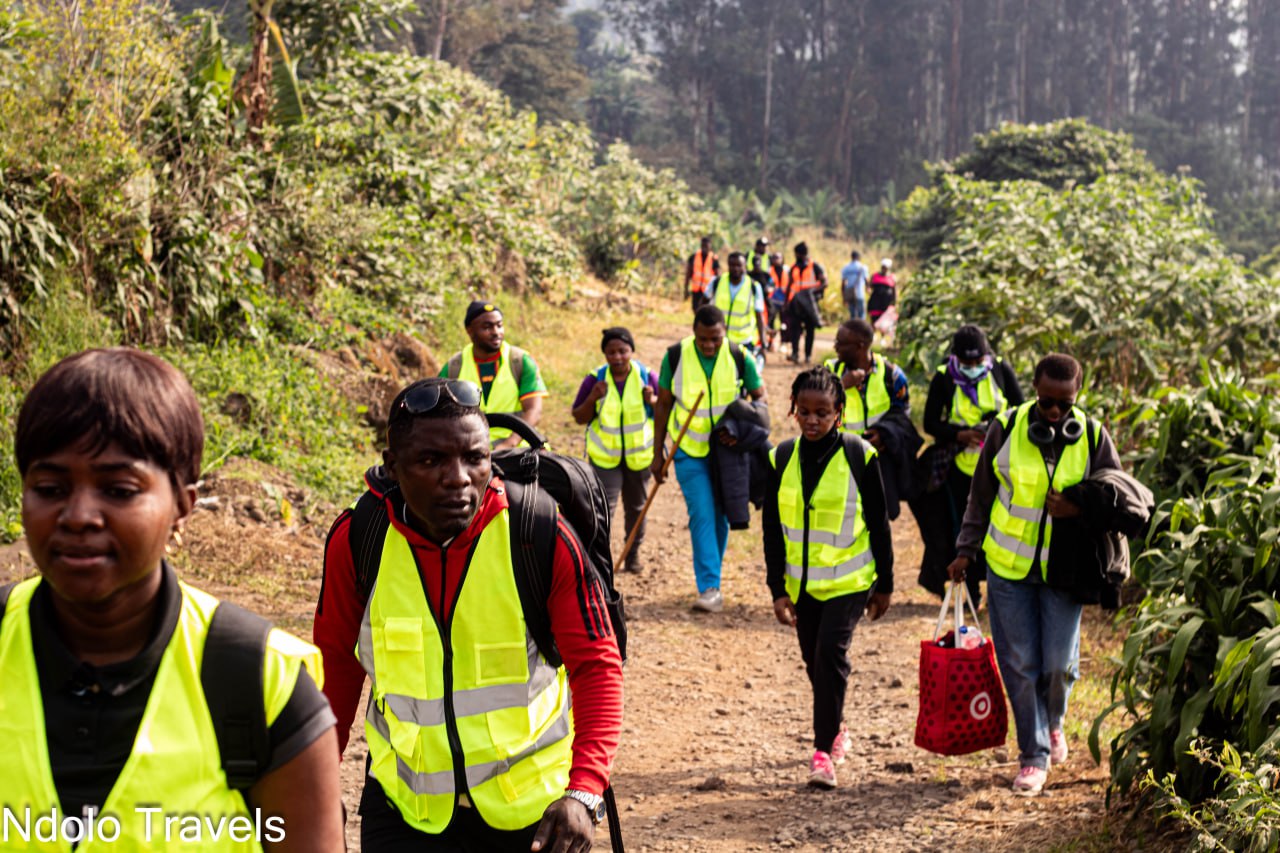
Mount Fako. Mount Cameroon. Whatever you call it, the climb starts in one place more than any other: Buea — the little town that sits on the mountain’s lower flank and acts like a quiet, confident guardian. If you’re coming to climb, your story begins here. Buea is the gateway: permits are issued here, guides meet you here, last-minute gear is bought here, and the trailhead — the real start line — is just a short drive from town.
Below I give you everything you need — directions, times, what to expect at the park office and Hut 1, packing and timing tips, where to meet guides and porters, and the little things only a guide who’s done the route hundreds of times will tell you.
1) The town that holds the mountain: Buea in plain words
Buea sits roughly 1,000 meters above sea level on the volcano’s lower slopes. It’s not large, but it’s full of life: university students, market sellers, small cafés, and families who have climbed Mount Fako for generations. The town is the logistics hub for every climb — hotels, guesthouses, transport, and the Mount Cameroon National Park offices are all here.
When you arrive, you’ll notice the air is cooler than the coast; you’ll see the mountain rising above the town, sometimes shrouded in mist, sometimes clear as a photograph. That sight alone sets your pulse right.
If you’re traveling from Douala or Limbe, you’ll pass through Mutengene and then into Buea. The usual arrival points are the Mile 17 motor park (if you came by shared taxi) or a hotel in Molyko, Great Soppo, or Upper Farms area if you were dropped off by private car. From any of these, the trailhead and park office are a short taxi ride away.
2) The official starting point: Upper Farms (the Guinness trailhead)
When people speak of “the trailhead,” they usually mean the Upper Farms entrance — sometimes called the Guinness Trail start point. This is the most common and well-developed entry to Mount Fako; it’s where the Mount Cameroon National Park office and ranger checkpoint are located, and where most guided groups begin their climb.
Upper Farms is a short drive from central Buea. The actual parking area sits just below the farms and houses that hug the lower slopes. From there a short walk leads to the trail proper. When I lead groups, we meet at a clearly visible park gate or at a pre-agreed hotel in Upper Farms and walk together up to the ranger post.
Key things you’ll see at the Upper Farms start: the park office (where permits are processed or checked), the rangers’ hut, locals selling snacks, and often a few porters waiting for hikers. It’s tidy, organized, and the hub for official checks.
3) Where to pay permits and the entrance fee — what to expect
Before you step past Hut 1 or the ranger post, you must pay the Mount Cameroon National Park entrance fee and register. The standard, up-to-date numbers we use on Ndolo trips are:
-
Cameroonians: 1,500 XAF per person (entrance fee)
-
Foreign nationals: 10,000 XAF per person (entrance fee)
These payments are taken at the park office or gate and you’ll receive a receipt. That receipt is your proof — keep it safe; the ranger at Hut 1 will ask for it. If you’re traveling with Ndolo Travels or another operator, we usually handle these payments in advance so you don’t lose time at the gate.
You should also register your climbing party (names, ID/passport, planned route, expected return date). This registration matters for safety — the park keeps a list of people on the mountain so rangers know who is out there in case of emergencies.
Practical tip: the office accepts cash. Bring exact change if you can; the park staff appreciate that and it speeds the process up.
4) The park office & where it sits (logistics and opening times)
The Mount Cameroon National Park office for Upper Farms is the place you’ll visit for permits, park rules, and official briefings. In most cases, the office opens in the morning — but don’t rely on strict clock times. I’ve guided hikers who arrived late in the afternoon and the staff still helped, but it’s smarter to get there a day before your climb so paperwork doesn’t eat into your hiking day.
If you’re independent, plan to arrive in Buea at least 24 hours before your planned trail start to process permits, buy supplies, and meet local guides or porters.
If you’re with Ndolo, we handle the paperwork for you. You still usually stop at the office briefly to show IDs and get your final stamp.
5) The checkpoint: Hut 1 — what it is and why it matters
The first checkpoint you’ll meet on the trail is Hut 1. Don’t imagine a hotel — it’s a modest shelter, a water spot, and critically, the point where the security guard/ranger makes sure everyone entering the park is recorded. Hut 1 sits where the forest begins to close in over the trail.
This is where the park officer at the gate will confirm your receipt and sign you into the trail register. Think of Hut 1 as the mountain’s front door. If you’re nervous, this is the time to ask rangers about trail conditions, recent weather, and emergency contacts. They’re helpful, used to climbers, and experienced.
Important: Hut 1 does not have beds. It’s not accommodation. It is a checkpoint and water/refill/rest area. This is a detail a lot of people mix up — Hut 2 is the lodge; Hut 1 and Hut 3 and even 1B are rest/stop points.
6) Exact directions from city points — how to get to the Upper Farms trailhead
From Mile 17 motor park (central Buea): take a short taxi toward Upper Farms or ask to be dropped at the Regional Delegation of Forestry and Wildlife in Upper Farms. The route will ascend and pass local farms; the gate will be on the roadside. A 10-minute taxi ride typically gets you there.
From Molyko or Great Soppo (common lodging areas): it’s a quick 10–15 minute taxi. Tell the driver “Upper Farms — park office” and they’ll know. Taxi fares are modest; agree the price before you go if possible (most short rides in town run between 1,000–3,000 XAF depending on distance and negotiation).
From Limbe: the drive is around 30–40 minutes via the Mutengene-Buea road. Most drivers drop hikers off at the Upper Farms check-in point.
From Douala: expect 1.5–2 hours for the trip; use a private hire (recommended) or a bus to Mile 17 and then a short taxi to Upper Farms.
If you’re driving a private vehicle, there is parking near the trailhead. It’s usually safe, but avoid leaving valuables visible. If you arrange a private pickup through a trusted operator (Ndolo Travels does this), your vehicle is secured or driven back to a safe spot until your return.
7) Bova Road, Bokwango, and alternative trailheads — not everything starts at Upper Farms
Yes, Upper Farms is the most common start — but it’s not the only one. The mountain has several access points depending on which route you choose:
-
Bova Road / Chute Route: This route begins higher up, and for part of the way you can reach starting points with a 4×4. Bova is motorable and used by hikers who want to cut down the lower-forest section or who need to drive porters/cabin supplies higher up. If you want a shorter walk or a quieter approach, meet at Bova and start there. Expect a local transport charge if you take a 4×4.
-
Bokwango Route (Bokwango village entry): A less-crowded start with a more traditional village approach. The trailhead is in Bokwango village — take a short taxi from Buea toward Bokwango and ask to be dropped at the village center where the trail starts. This route is quieter, steeper in places, and more intimate.
Pick the start that suits your fitness, desired solitude, and transport logistics. If you’re unsure, the Upper Farms start is the easiest and most reliable for services and huts.
8) Where to meet your guide & porters in town — trusted meeting points
If you’re hiking with a guide, you’ll want a clear meeting point in Buea. Common, sensible places:
-
Your hotel in Molyko or Great Soppo (guides can come to you)
-
Mile 17 motor park (easy for groups arriving from Douala)
-
The Mount Cameroon National Park office in Upper Farms (if paperwork is needed first)
I always start meet-ups at the hotel or at the park office. When I guide, I prefer to have a small briefing in the hotel or at a café the evening before — it helps with final gear checks, paperwork, and pacing plans. Porters typically wait at the trailhead; your guide handles hiring and payment unless you’ve arranged porters independently. If you need porters, ask your operator to arrange them ahead of time — they’re in high demand on peak weekends.
9) Last-minute gear and shops in Buea — what you can realistically buy
Buea has decent supply options for last-minute needs. If you forgot a headlamp, rain jacket, gloves, sleeping bag, or trekking poles, Molyko and the market areas have shops that sell basic gear. Expect local brands and reasonable prices. For technical or high-end items, bring them from Douala or rent through your operator.
Muea Market and small outdoor shops are the places to look. Ndolo Travels also runs a rental service for hiking essentials if you need reliable gear — tell us in advance and we’ll have items ready.
Don’t forget food: energy bars, bananas, bread, and bottled water are available nearly everywhere in town — stock up the evening before.
10) Timing: when to start and why the early hours matter
Timing is everything. Most summit pushes start very early; if you plan to be at the summit for sunrise, you must begin the summit leg around 2:00–3:00 a.m. (this is from Hut 2 or Hut 3, depending on your itinerary). That means your real trailhead departure depends on whether you are doing a 2-day or 3-day hike.
If you begin the full climb from Upper Farms on a 2-day itinerary, you’ll usually depart the trailhead in the early morning (6:00–7:00 a.m.) to reach Hut 2 in good time and rest before the summit push the next night/early morning. On a 3-day itinerary, you may leave Buea around 8:00 a.m. on Day 1 for an easier day to Hut 2, giving more acclimatization time.
Whatever your plan, aim to do permits and any park admin the day before so that your morning departure from Buea is smooth — no paperwork delays at the park office.
11) What happens at the gate on trail day — a step-by-step of the first hour
When you reach the gate at Upper Farms on your hike day, here’s what typically happens:
-
Park staff check permits and receipts. You show the entrance payment receipt (or your operator shows it). The ranger confirms names and that your party is registered.
-
Final safety briefing. Rangers or guides will give short notes on trail conditions, expected weather, and emergency contacts. If there are any closures or detours, you’ll be told here.
-
Last gear checks. Guides make sure everyone has water, layers, headlamps (if a night start), and that porters are ready.
-
Sign-in at Hut 1. Even after the gate, Hut 1 is the first stop on the trail — you’ll pass there within an hour. It’s both a rest and check-in point.
This first hour is important. If anything feels off with your gear or your body, this is the last real opportunity to adjust before the forest swallows you.
12) Safety, communication, and emergency protocol at the trailhead
The park maintains ranger contact, but cellular coverage is patchy on the mountain. Guides carry radios or phones and have local emergency plans. If you have medical conditions, tell your guide beforehand and bring copies of prescriptions. The park keeps lists of climbers and estimated return times for safety; always stick to your registered route and return schedule.
If you’re hiking independently, give a clear return time at the park office and check-in points. The mountain is generous but it’s also serious — respect the rules.
13) Cultural and environmental etiquette at the trailhead and on the way up
The people who live in Buea and around Mount Fako are proud of their mountain. Respect is simple: greet locals, don’t leave waste, avoid cutting plants, and ask before photographing people in village areas. At the trailhead, buy water or snacks from local sellers if you can — it supports the community.
On the ecological side, the mountain is protected. Pack out everything you bring in. Avoid single-use plastics where possible; bring garbage bags and carry them back to town. Your responsible behavior helps keep the huts and trails open for future hikers.
14) Common beginner mistakes at the trailhead — and how to avoid them
People underestimate the logistics: they arrive late to the park office, forget cash for fees, carry too much weight, or expect Hut 1 to be an accommodation. Avoid these errors by arriving in Buea a day early, checking permit fees in advance (1,500 XAF for Cameroonians, 10,000 XAF for foreigners), packing light, and confirming meeting points with your guide.
Also don’t underestimate the weather — bring rain protection even in dry months. Conditions change faster than you think once you pass the forestry line.
15) Final checklist right before you step past Hut 1
Before you take that first step beyond the trailhead into the forest, do this quick checklist:
-
Permit / entrance fee receipt in your pocket or with your guide
-
Headlamp charged (if you’ll be hiking early or at night)
-
At least 2 liters of water or plan for refills at huts
-
Comfortable layers, waterproof jacket, hat, gloves (summit can be cold)
-
Cash for Hut 2 meals and tips (Hut 2 often requires cash)
-
ID/passport photocopy left with someone in town (or give copy to your guide)
-
Emergency meds, blister kit, and sunscreen
If all that’s checked — breathe. You’re ready.
16) Why the trailhead matters for the story of your climb
Where you start shapes how you feel on the mountain. Upper Farms gives you a structured, community-connected start with rangers, huts, and an organized approach. Bova Road gives you a head start into higher zones if you want less walking through farmland, and Bokwango offers solitude and village flavor. Each trailhead is a different opening scene to the same story.
When I meet hikers at the trailhead, I always say: this is where we choose how we want to be tested — fast and fierce, slow and reflective, or quiet and wild. Choose the start that fits your courage.
17) If you want Ndolo Travels to handle it — what we arrange at the trailhead
We meet you where it’s easiest: your hotel in Buea, Mile 17, or the park office. We handle permits, fees, park briefings, porter hiring, and luggage transfers. At the gate we do a final gear check, make sure water is topped up, and lead the group to Hut 1 with calm pacing. If anything goes wrong, we’ve done this enough times to know what to do. You focus on breathing, walking, and listening to the mountain.
Closing: The first step is the hardest — and the most important
Finding the Mount Fako trailhead in Buea is easy once you know the town, the gate, and the people. Upper Farms is the classic start, Hut 1 is the first real checkpoint, Hut 2 is the lodge that catches your exhaustion and gives it back as story, and the summit waits at the top.
The trailhead is more than a place on a map; it’s where you decide how the climb will go. Arrive a day early, sort your permits (1,500 XAF for Cameroonians, 10,000 XAF for foreigners), meet your guide, buy your snacks, and sleep well. The mountain is patient. Be ready.
When you stand at the gate, receipt in pocket, breathe the cool air, and look up — that’s when the real journey begins. Walk slow, respect the mountain, and keep your eyes open. Mount Fako will teach you more than the path. It will teach you how to move through life with patience, strength, and quiet joy.

Leave a Reply