
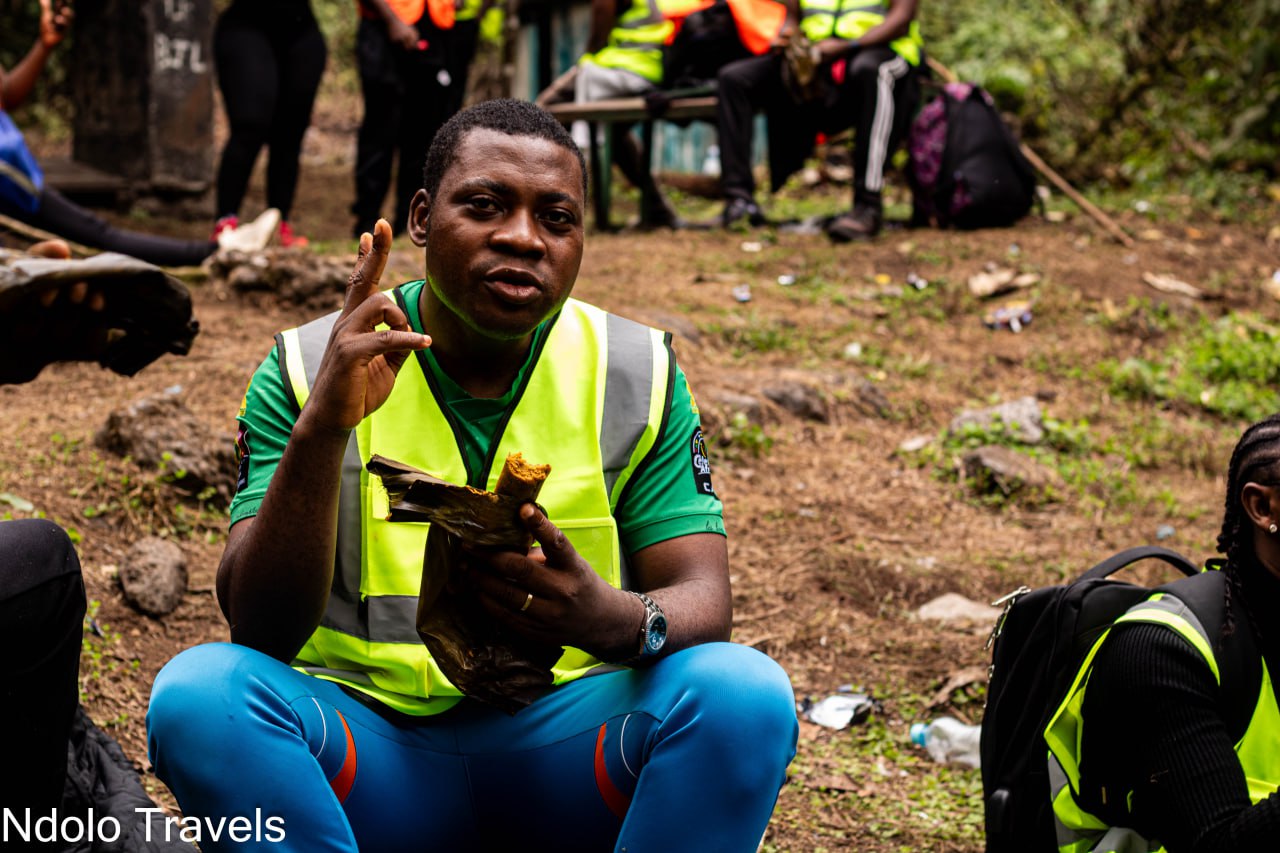
The first time I watched someone stand at the foot of Mount Cameroon with nervous eyes and trembling hands, I knew exactly what they were feeling. That quiet mix of excitement and fear. That question that hides behind every smile: “Can I really do this?”
Mount Cameroon is not your average hill. It’s West Africa’s highest peak — 4,095 meters of forest, savanna, rock, and ash. Locals call it Mongo ma Ndem, meaning “Mountain of Greatness.” It rises from the Atlantic coast and climbs straight into the clouds, cutting across rainforests, grasslands, and volcanic slopes. Every part of it demands something from you.
But here’s the truth — yes, a beginner can hike Mount Cameroon. Thousands have done it. But it’s not about being strong. It’s about being willing to learn, to adapt, and to keep going even when your legs are screaming and the summit still looks impossibly far. This isn’t a story about muscles or fancy gear. It’s about heart, patience, and preparation.
Let’s take a deep, realistic look at what it really takes for a beginner to conquer Mount Cameroon — what makes it hard, what makes it beautiful, and what makes it one of the most life-changing experiences you’ll ever have.
Understanding the Challenge: What Makes Mount Cameroon Unique
If you’ve never hiked before, the first thing to know is that Mount Cameroon is not just a climb — it’s a journey through changing worlds.
You start from Buea, a town sitting quietly at the mountain’s base. It’s warm, green, and alive. The first stretch takes you through dense tropical rainforest, where the air feels thick and wet. The ground is soft and sometimes muddy. You’ll hear insects buzz, birds sing, and your own heartbeat echoing as you climb higher.
This section can be deceiving for beginners. It’s beautiful, but it’s steep. You might find yourself stopping often, leaning on your knees to catch your breath. Don’t worry — everyone does. The key is pacing yourself.
After a few hours, the trees thin out. You step into the savanna zone, a grassy, open area with scattered shrubs and wildflowers. The air turns cooler, the wind picks up, and the view stretches far behind you. On clear days, you can see Limbe and the Atlantic Ocean shimmering below.
This is where you might spot the famous bishop birds — small but stunning creatures unique to Mount Cameroon. The males have long tail feathers that dance in the wind, while the females are larger and more grounded. It’s one of those quiet rewards that make you forget the climb for a moment.
Beyond the savanna lies the rocky zone, a landscape of black sand, volcanic stone, and thin air. The higher you go, the colder it gets. This part of the mountain is quiet, lonely, and powerful. Every step feels heavier, but every view feels like a miracle.
That’s the beauty of Mount Cameroon. It’s not just about reaching the top — it’s about experiencing the transformation that happens in your body, your mind, and the world around you.
So, Can a Beginner Really Do It?
Yes. But with honesty — it’s hard.
The climb is physically demanding, especially for beginners who haven’t trained their bodies for long, steep ascents. The trail is uneven and sometimes slippery. The weather changes without warning — one moment you’re sweating, the next you’re shivering.
But difficulty doesn’t mean impossibility. With the right mindset, preparation, and guidance, beginners can and do make it to the top. Some even surprise themselves with how strong they are.
In fact, the mountain has a way of teaching you your own limits — and then showing you how to move past them.
How to Prepare as a Beginner
Preparation is the difference between a miserable climb and a magical one. Let’s walk through how you can set yourself up for success.
1. Start Training Early
Even if you’ve never hiked before, you can train your body to handle Mount Cameroon’s challenges. Start at least 8–12 weeks before your climb. Go on long walks, climb stairs, or jog regularly. The goal isn’t to become an athlete — it’s to build endurance.
Your biggest enemy on the mountain isn’t the altitude — it’s fatigue. If your body is used to movement, you’ll recover faster between steps.
Try carrying a backpack during your walks to get used to the feeling of weight. You don’t need to train for speed — just consistency. The mountain rewards steady effort, not bursts of strength.
2. Focus on Leg and Core Strength
Squats, lunges, and light jogs are great for building your legs. You’ll be using them for hours. Your core helps with balance, especially when the trail becomes rocky.
The key is to stay regular. Even 20–30 minutes a day adds up if you stay consistent.
3. Get Mentally Ready
Beginners often underestimate how much of the challenge is mental. There will be times when your body feels fine but your mind wants to quit — when you look up and see the endless trail ahead and wonder if it’s worth it.
That’s the real test. And it’s normal. Every hiker, beginner or not, reaches that breaking point. What matters is how you respond. Breathe. Rest. Look around. Remember why you came.
Once you push past that mental wall, everything changes. The mountain stops being your enemy and becomes your teacher.
4. Acclimatize in Buea
Spend at least a day in Buea before your climb. It’s not just for logistics — it helps your body adjust to the altitude and cooler weather. You can also explore the town, visit the park office, and meet your guide.
The Climb, Step by Step
For beginners, knowing what to expect helps a lot. The hike usually takes two to three days, depending on your route and pace. Let’s walk through it.
Day 1: From Buea to Hut 2
You’ll start early, usually around 7:00 AM. The first part leads through rainforest — cool, damp, and alive. It takes about 2–3 hours to reach Hut 1, where you can rest, drink water, and meet the park guard. There are no beds here — it’s a resting and drinking point.
From there, the trail grows steeper and the air heavier. Between Hut 1 and Hut 2 lies Hut 1B, also known as the intermediary hut. It’s a short stop where you can catch your breath before pushing on.
This section takes around 4–6 hours for beginners. Take your time. Move slowly, drink water often, and listen to your guide.
By late afternoon, you’ll arrive at Hut 2, the heart of the hike. Hut 2 is an ecological lodge and rest point. It’s the perfect place to sleep, eat, and recharge.
Meals range from 3,000 CFA for breakfast to about 20,000 CFA for larger dishes or drinks. Accommodation varies — from shared cabins around 5,000 CFA to private rooms that go up to 70,000 CFA. There are even showers and toilets, which feel like a blessing after the long climb.
Spend the night here. Rest deeply — the summit day starts early.
Day 2: The Summit Push
Around 3:00 AM, you’ll wake up for the final ascent. It’s cold, dark, and quiet. You’ll move slowly under the stars, your headlamp cutting through the mist.
The trail from Hut 2 to the summit passes Hut 3, a simple shelter where most people take short breaks. Beyond that, the terrain turns sandy and rocky — pure volcanic ash. Each step feels like two steps back, but you’re close now.
At dawn, you’ll reach the top. The view is indescribable — lava fields stretching below, the Atlantic Ocean shining beyond the horizon, clouds glowing gold in the sunrise. Beginners often cry at this point. Not from exhaustion, but from pure, unfiltered awe.
You’ve done it. You’ve climbed Mount Cameroon.
Day 3: The Descent
The way down is easier on the lungs but tougher on the knees. Go slowly. Use trekking poles if you have them. Most groups return through the same route, though some descend via the Bova Road — a scenic 4×4-accessible path that winds through farmlands and forest.
How Hard Is It Really?
Let’s be honest. For a beginner, Mount Cameroon is hard — but not impossible.
The physical challenge is real. You’ll feel sore. Your legs will burn. You’ll probably question your life choices somewhere between Hut 1B and Hut 2. But it’s not unbearable. The difficulty lies in endurance, not danger.
The mental challenge is what catches most people off guard. The mountain demands patience. It asks you to slow down, to listen to your body, to accept discomfort instead of fighting it. Once you embrace that rhythm, the journey becomes easier — even beautiful.
Every beginner struggles, but almost every beginner also reaches a point of wonder. A moment where they look around and realize how far they’ve come. That’s the magic of Mount Cameroon.
Safety and Support
One reason beginners succeed on this climb is because you’re never alone.
Guides and porters know this mountain like their own heartbeat. They set the pace, carry heavy gear, and watch out for every hiker’s safety. If you climb with an experienced team like Ndolo Travels, everything — from permits to meals to first aid — is handled for you. You just focus on the climb.
Guides are trained to recognize altitude symptoms and handle unpredictable weather. Porters help carry essentials, leaving you with only a light backpack. That support makes all the difference, especially for beginners.
The trail itself is safe. The main risk is exhaustion or slipping on wet ground. With proper shoes, pacing, and hydration, these risks are easy to manage.
Cost and Logistics for Beginners
Climbing Mount Cameroon can cost anywhere from 150,000 to 300,000 CFA (about $250–500 USD) depending on how comfortable you want your experience to be.
This usually covers your guide, porter, park permit, food, and accommodation during the climb. If you go with a travel company like Ndolo Travels, all logistics are arranged for you — from transportation to meals and water supply.
Beginners often find this the best option, since it removes the stress of organizing everything yourself.
When to Go
Timing is everything. The best period for beginners is during the dry season, from November to March. The trails are clearer, and the skies are open. You’ll still experience cool nights, but you’ll avoid the heavy rains that make the paths slippery and unpredictable.
If you climb during the rainy season (April to October), expect mud, mist, and slower progress — though the scenery is breathtakingly green.
Lessons Every Beginner Learns
Every beginner who climbs Mount Cameroon learns three important truths:
First, you’re stronger than you think. The mountain pushes you, but it also builds you. You discover muscles — physical and emotional — you didn’t know you had.
Second, the summit isn’t the only reward. The laughter at rest stops, the views from the savanna, the taste of warm food at Hut 2 — these are moments that stay with you.
And third, the mountain doesn’t care about experience. It doesn’t favor experts or punish beginners. It treats everyone equally — and teaches everyone something different.
Final Thoughts: Yes, You Can Do It
So, can a beginner successfully hike Mount Cameroon? Absolutely.
But don’t come expecting it to be easy. Come ready to be challenged, changed, and inspired. Come with respect — for the mountain, for your body, and for the journey itself.
The climb will humble you, but it will also lift you. When you finally stand at the top, watching the sun rise over the world below, you’ll understand something that words can’t describe — that the mountain didn’t just test you, it transformed you.
You’ll come down different. Lighter. Stronger. Proud.
And when you look back at that dark silhouette of Mount Cameroon towering over the clouds, you’ll smile quietly to yourself and think: I did that.
If your heart is already beating faster just thinking about it, then maybe it’s time.
Pack your courage, your curiosity, and a bit of endurance.
And let Ndolo Travels handle the rest — from your guides to your meals to every step of the journey.
Because this mountain isn’t waiting for perfect athletes.
It’s waiting for ordinary people brave enough to try.
Leave a Reply